Revenge can take more from you than it ever takes from the person who hurt you. That is the hard truth behind one of the most famous sayings linked to Confucius.
If you’ve ever replayed a slight, betrayal, or insult in your head, this lesson lands fast. The quote about “digging two graves” is less about violence and more about the cost of letting anger take over your life.
The quote means more than most people think
“Before you embark on a journey of revenge, dig two graves.” People often hear that line and picture a simple warning about mutual destruction. One person gets hurt, then the other does too, and everyone loses.
That reading catches part of the point, but it misses the sharper lesson. The second grave is not only for the target of revenge. It is also for the version of you that existed before hate took center stage.
A simple way to understand the quote is this:
- One grave is for the person you want to destroy.
- The other grave is for the self you bury while chasing that goal.
That idea changes the saying from a threat into a mirror. Revenge does not stay neatly aimed at someone else. It enters your schedule, your thoughts, your sleep, and your mood. Over time, it asks for more than anger. It asks for identity.
You start with a wound. Then, if you stay fixed on payback, you build your days around it. That is why the saying still feels current. It describes what happens when a hurt turns into a mission.
The line also pushes back against a common fantasy. Many people imagine revenge as a clean ending, a final score settled. In real life, it rarely works that way. Once resentment becomes your project, it changes your inner life long before it changes theirs.
Confucius drew a line between justice and revenge
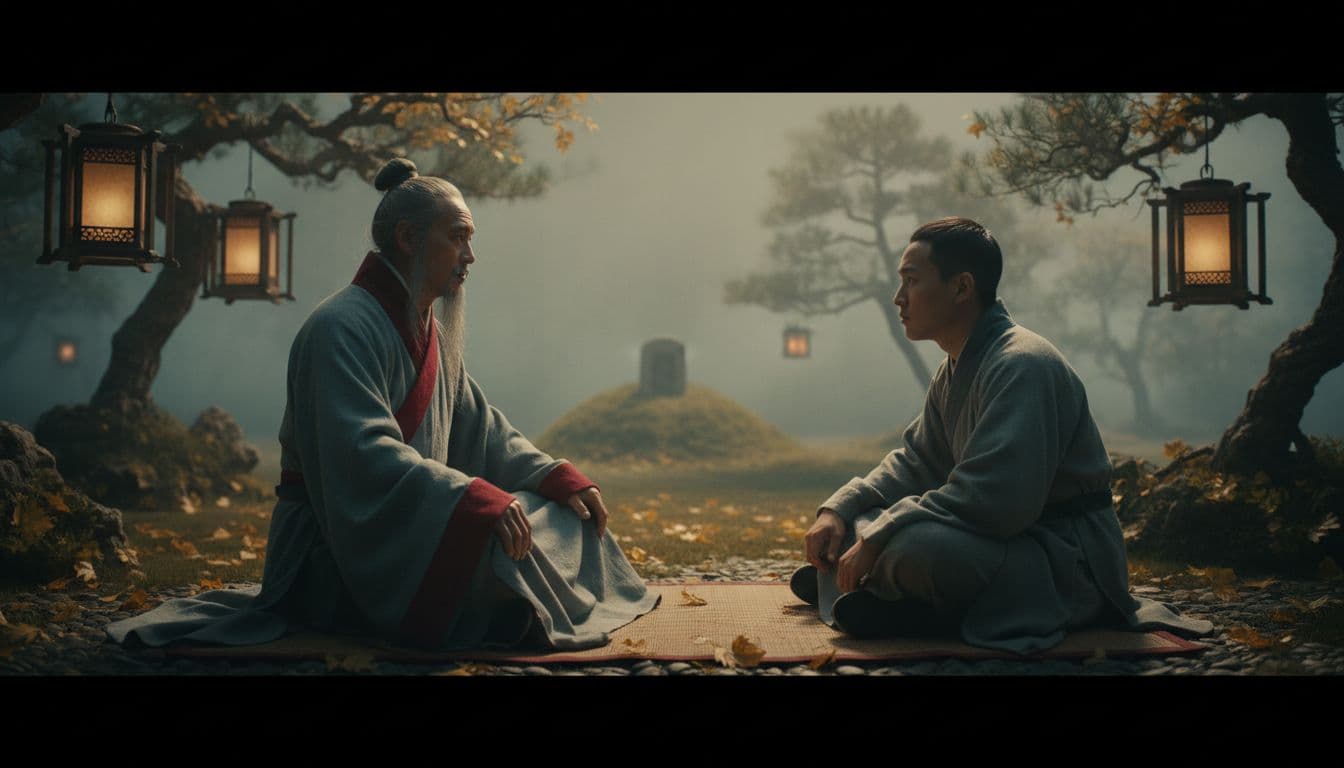
About 2,500 years ago, a student asked Confucius how to respond to people who had wronged him. The answer was direct, measured, and harder than it first sounds.
A student asked how to answer a wrong
“Recompense injury with justice, and recompense kindness with kindness.”
This is not passive advice. Confucius did not tell the student to pretend the wrong never happened. He did not say every injury should be excused, softened, or forgotten. Instead, he made a distinction between justice and revenge.
Justice has limits. It looks at what happened and responds in proportion. Kindness also has its place, but it is not the answer to every offense. A person who treats kindness and injury the same does not become wise. That person becomes confused.
At the same time, Confucius warned against another mistake. Once justice turns personal and obsessive, it stops being justice.
Why revenge becomes a full-time job
The warning that follows is what gives the whole teaching its force. Revenge is a full-time job. Once you commit to it, your attention is no longer your own.
That kind of pursuit demands more than a brief burst of anger:
- You have to become someone else in order to destroy them.
- You have to live in their head, study their moves, and breathe their hate.
Those lines explain why revenge corrodes the person seeking it. To keep the fire alive, you must revisit the insult again and again. You replay conversations. You imagine outcomes. You monitor their life. You carry them with you even when they are not present.
In that state, your enemy still controls part of your mind. They shape your focus because your emotional life now depends on them. One grave is still for them. The other is for the person you used to be, the one who had room for other goals, other joys, and other relationships.
This is where the teaching becomes less moralistic and more practical. Confucius is not merely saying revenge is wrong. He is saying revenge is expensive. It costs attention, peace, and character. The bill keeps growing while you tell yourself you are in control.
Revenge keeps your mind tied to the person who hurt you
Modern psychology gives this old lesson a familiar shape. When your thoughts circle the same injury over and over, you do not stay in the original moment. You extend it.
When your peace depends on their pain
Psychology calls this the rumination trap. In plain language, rumination means repeating the same painful thought until it becomes part of your daily life. You keep returning to the offense, not to solve it, but to relive it.
That is what revenge often does. It ties your happiness to the suffering of someone else. As a result, your emotional state becomes dependent on what happens to them.
The misery shows up either way:
- If they seem to win, you feel beaten all over again.
- If they lose, the relief is thin because you spent your energy building a grave instead of building a future.

Revenge promises closure, but rumination keeps the wound open. The other person may have moved on, or may not even know how much space they occupy in your head. Meanwhile, your inner life stays stuck at the scene of the offense.
That is why revenge can feel active while still being a form of imprisonment. You look busy. You feel intense. Yet your world narrows around a single hurt.
Time is your true loss
The strongest line in this teaching may be the simplest: you do not lose your life when you take revenge, you lose your time. And time is the one thing you cannot recover.
Money can return. Reputation can heal. Opportunities can reappear in new forms. Time does not come back.
A short comparison makes the point clearer:
| Focus | What it demands from you | What it leaves behind |
|---|---|---|
| Revenge | Attention, anger, fixation | More bitterness, less peace |
| Justice | Clear judgment, proportion, restraint | A boundary without obsession |
| Growth | Time, effort, forward motion | A stronger life and a freer mind |
The deepest cost of revenge is not always what you do. Often, it is what you fail to build while staring backward. You lose hours that could have gone into your work, your health, your family, or your next chapter.
The grave revenge digs first is often measured in lost time.
The best revenge is becoming someone who no longer needs it
The teaching does not end in warning. It ends in a shift of aim. Once you stop treating payback as victory, a different kind of win becomes possible.
Winning looks different than people expect
The best revenge is becoming someone who no longer needs revenge. That sentence changes the goal from destruction to freedom.
When you no longer need the other person to suffer, you take back your center of gravity. Your mood stops rising and falling with their fate. Your attention returns to your own life.
This does not mean the original hurt was small. It means you refuse to let that hurt become your permanent identity. That is a different kind of strength.
Many people confuse moving on with surrender. Confucius points toward something else. A person can remember the lesson, keep proper boundaries, and still refuse to live under the command of old anger.

Build a future instead of a grave
The closing idea is simple and sharp: do not dig two graves. Build one life so full, so steady, and so purposeful that the people who wounded you stop being the center of the story.
That shift looks like this:
- Your attention returns to your own path.
- Your energy goes into building instead of tracking.
- Your future matters more than replaying an old injury.
“That is the only way you win.”
There is nothing soft about that statement. It is disciplined. It asks you to stop feeding a bond you never wanted. Hatred keeps a relationship alive long after trust has died. A better life breaks that bond.
This is why the teaching still matters in work, leadership, family life, and personal growth. People get hurt. They get overlooked, betrayed, insulted, and used. The first wave of anger is human. The long habit of living inside that anger is where the damage grows.
A grudge can feel like strength because it stays hot. In truth, it often keeps you tied to the very person or event you want to rise above. Building a better life does more than ease pain. It restores direction.
One life is worth more than two graves
Confucius’ warning stays powerful because it is honest about the price of revenge. You may think you are punishing someone else, but you are often handing over your own peace, time, and attention.
Justice has a place. Boundaries have a place. What drains a life is the decision to keep reliving the wrong until it becomes your identity. Freedom starts when you stop measuring your happiness by someone else’s pain.
What’s one thing you’re ready to stop ruminating on so you can start building?