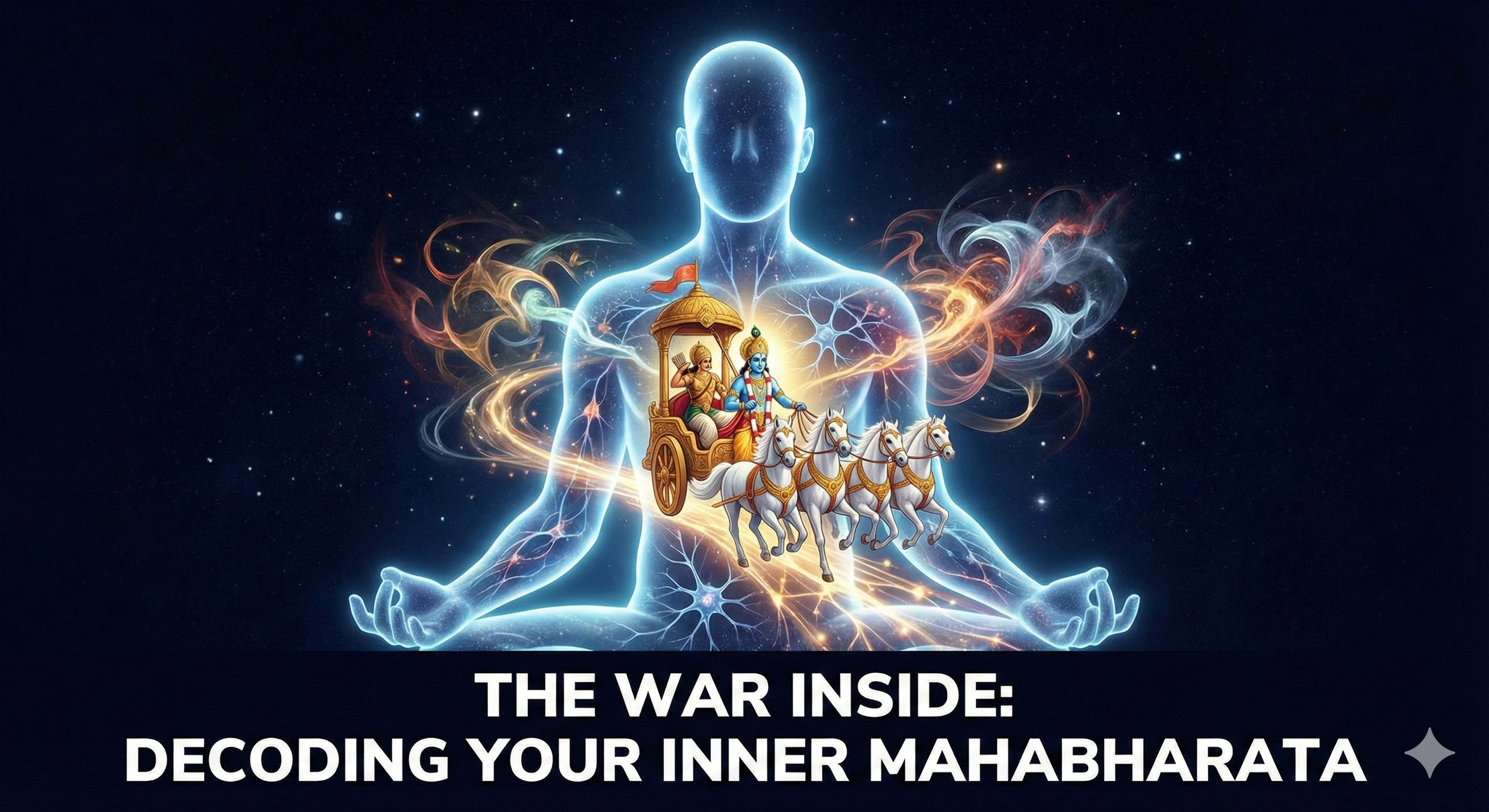
Krishna Archetypes: The Inner Guide, The Strategist, The Playful Disruptor
We don’t meet Krishna only in temples or scriptures—we meet him every single day in our inner dialogue, in our toughest decisions, and in the quiet courage to do what is right even when it is uncomfortable. Krishna is not just a character in the Mahabharata; he is an archetype (krishna archetype), a living blueprint of how divine consciousness can guide human conflicts, careers, and relationships.
Section 1 – Krishna: The Inner Charioteer
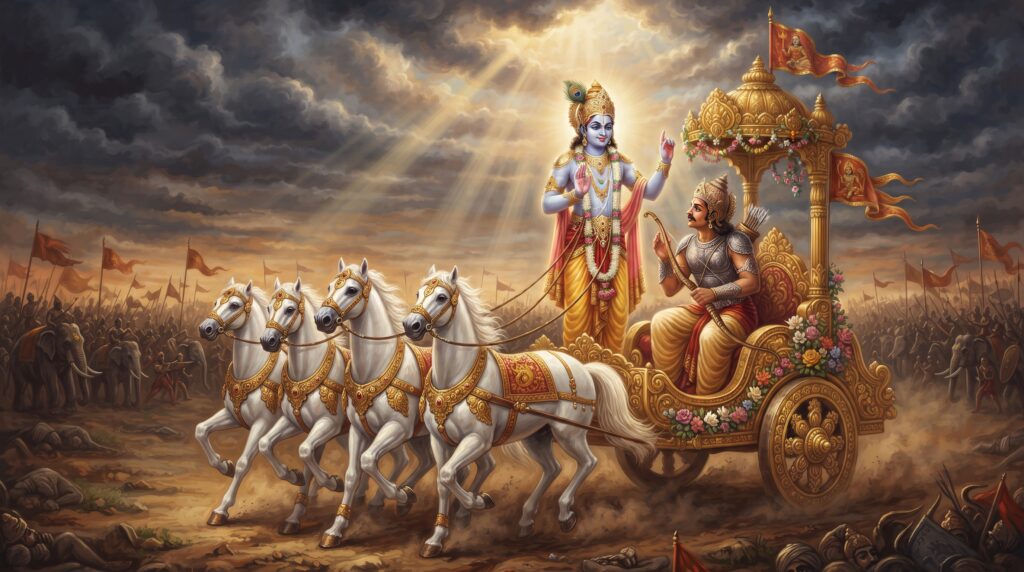
In the Mahabharata, Krishna does something radical: he agrees to drive Arjuna’s chariot but refuses to pick up a weapon. He chooses influence over control, guidance over domination. This is the first Krishna archetype—the Inner Charioteer.
- Krishna represents Kutastha Chaitanya, the witnessing consciousness that illuminates the mind but does not get entangled in its drama.
- Like the light in a theatre, he reveals every actor—the ego, the doubts, the ambitions—without becoming any of them.
- Inside us, this archetype appears as that calm inner voice which says, “Pause. Look again. Act from clarity, not from fear.”
When you feel torn between anxiety and duty, you are standing exactly where Arjuna stood—on your own Kurukshetra, the battlefield of inner conflict. Summoning the Krishna archetype means allowing awareness to drive your decisions instead of panic or people-pleasing.
Section 2 – Krishna: The Strategic Coach of Dharma
Krishna is not a passive saint; he is a fierce strategist of Dharma. He knows that goodness without intelligence becomes powerless, and intelligence without ethics becomes destructive.
This archetype shows up as:
- The ability to see the whole system—consequences, patterns, and the ripple effect of choices.
- The courage to give uncomfortable advice, like Krishna pushing Arjuna to rise above emotional paralysis and perform his duty.
- The wisdom to balance compassion with clarity, love with boundaries, and faith with practical action.
In modern life, this is the mentor who asks tough questions, the manager who refuses shortcuts, and the inner coach that reminds you: “If you avoid this decision today, you will create bigger suffering tomorrow.” Krishna as strategist teaches us that spiritual maturity is not escape from responsibility but intelligent engagement with it.
Section 3 – Krishna: The Playful Disruptor
Before the war, Krishna is the mischievous cowherd, the playful lover, the one who steals butter and hearts. This seems contradictory—how can the same Krishna guide a cosmic war and dance in the moonlight?
This archetype reveals that:
- Life needs Leela—play—so that seriousness does not harden into stress and spirituality does not become dry morality.
- Creative disruption is often necessary to break rigid patterns, just as Krishna’s unconventional choices constantly challenge society’s fixed beliefs.
- Joy, humor, and beauty are not distractions from the path; they are fuel that keep us moving through hardship.
Inside us, this Krishna awakens when we laugh in the middle of chaos, create art in the middle of deadlines, or choose curiosity instead of cynicism. He reminds us that the soul is not designed only to endure life—but to dance through it.
Section 4 – Understanding the Krishna Archetypes as Inner Leadership Models
The Mahabharata is not just a story of kings; it is an anatomical blueprint of the human soul. Krishna stands as the integrating principle—the consciousness that can harmonize our scattered inner army.
You can think of three Krishna archetypes as inner leadership models:
When these three archetypes awaken together, you stop living reactively and start living architecturally—designing your responses instead of being dragged by impulses.
Section 5 – Inviting Krishna into Daily Life
You don’t have to wait for a battlefield to invoke Krishna. You can practice these archetypes every day:
- Before a hard conversation, pause and call upon the Inner Charioteer—observe your emotions without becoming them.
- Before a major decision, invoke the Strategic Coach—ask, “What choice honors Dharma, not just comfort?”
- When life feels heavy, invite the Playful Disruptor—do one small joyful, creative act to remind yourself that you are larger than your problems.
In this way, Krishna stops being a distant mythological figure and becomes a living framework for inner leadership, resilience, and conscious action. The real question is not “Do you believe in Krishna?” but “Are you willing to let the Krishna archetype drive your chariot today?”
Start you journey on Inner Mahabharatha here: Warrior MBA Courses